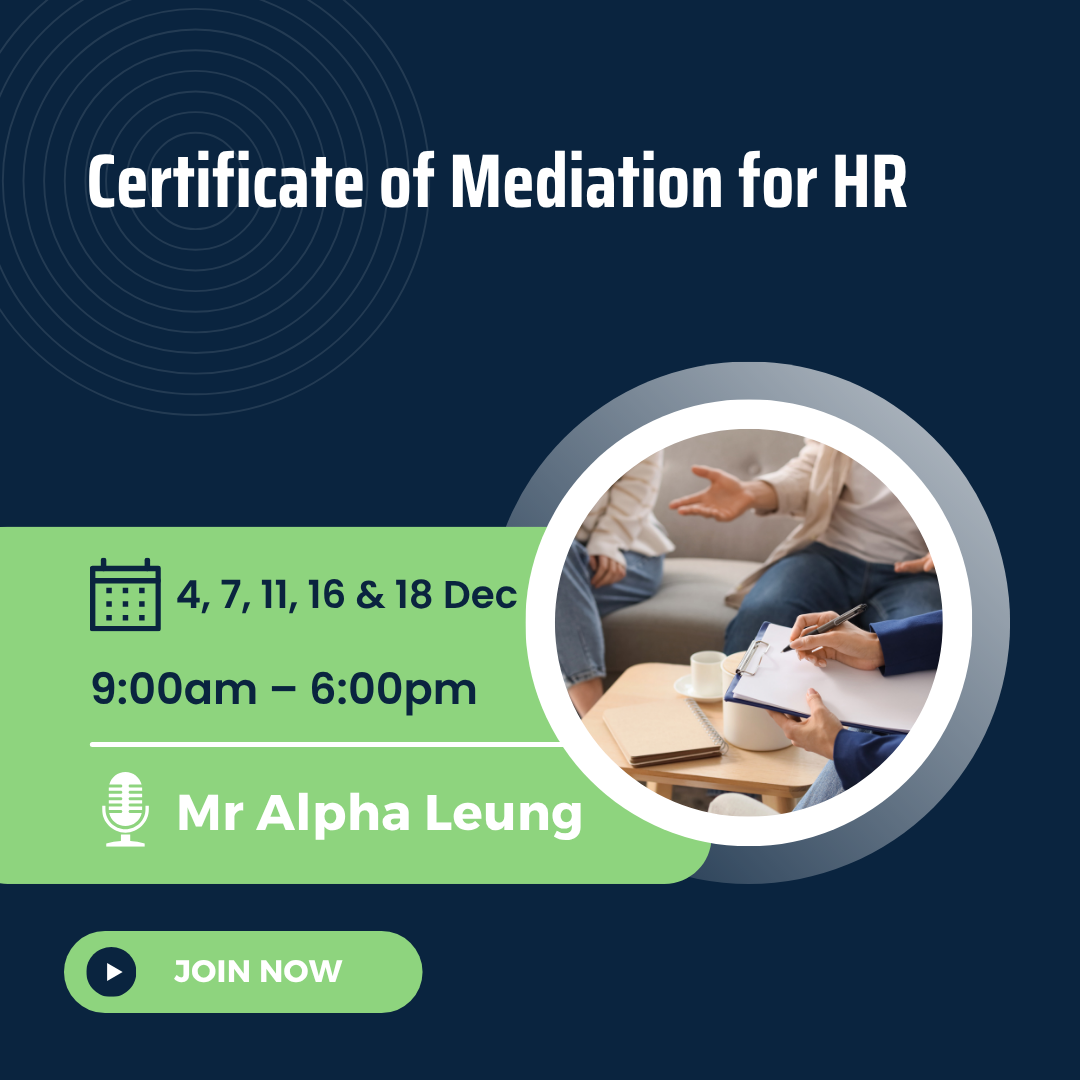
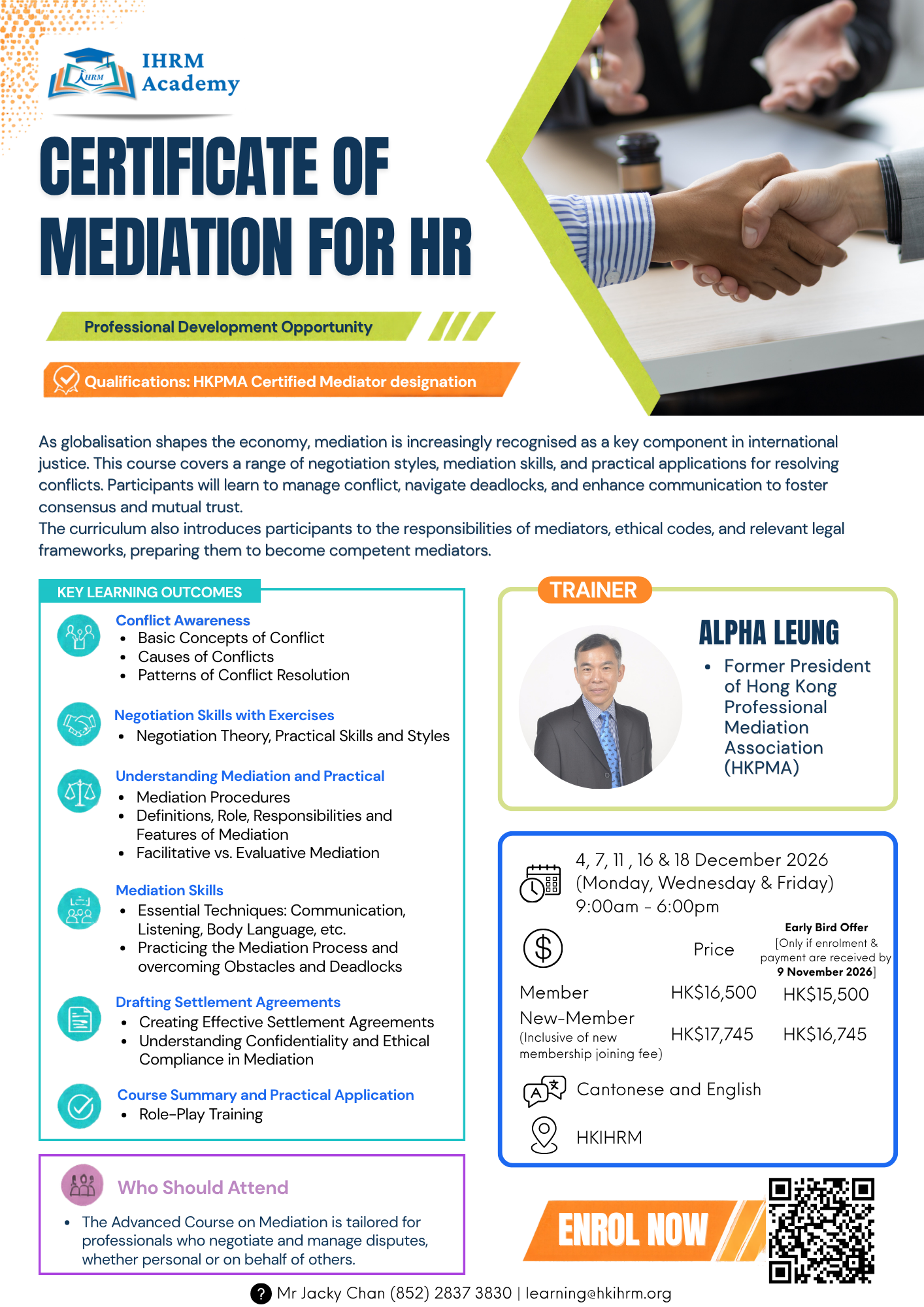
As globalisation shapes the economy, mediation is increasingly recognised as a key component in international justice. This course covers a range of negotiation styles, mediation skills, and practical applications for resolving conflicts. Participants will learn to manage conflict, navigate deadlocks, and enhance communication to foster consensus and mutual trust.
The curriculum also introduces participants to the responsibilities of mediators, ethical codes, and relevant legal frameworks, preparing them to become competent mediators.
Key Learning Outcomes
Conflict Awareness
- Basic Concepts of Conflict
- Causes of Conflicts
- Patterns of Conflict Resolution
Negotiation Skills with Exercises
- Negotiation Theory, Practical Skills and Styles
Understanding Mediation and Practical
- Mediation Procedures
- Definitions, Role, Responsibilities and
Features of Mediation
- Facilitative vs. Evaluative Mediation
Mediation Skills
- Essential Techniques: Communication, Listening, Body Language, etc.
- Practicing the Mediation Process and overcoming Obstacles and Deadlocks
Drafting Settlement Agreements
- Creating Effective Settlement Agreements
- Understanding Confidentiality and Ethical Compliance in Mediation
Course Summary and Practical Application
- Role-Play Training
Who Should Attend
The Advanced Course on Mediation is tailored for professionals who negotiate and manage disputes, whether personal or on behalf of others.
![[Free] Certificate in AI Governance Information Webinar](https://hkihrm-media-prod.s3.ap-east-1.amazonaws.com/uploads/2026/10/20270113-Certificate-in-AI-Governance-Information-Webinar-630x630.png)