Skip to content Skip to footer

What Employers Need to Know About COVID-19 Vaccinations By Jennifer Van Dale, Partner, Eversheds Sutherland

What Employers Need to Know About COVID-19 Vaccinations By Jennifer Van Dale, Partner, Eversheds Sutherland

Key takeaways:


  • As COVID-19 vaccines are approved and made available, one important question employers are asking is “Should and could the vaccine be made mandatory for employees?”

  • While organisations have a clear incentive to want staff to be vaccinated, it depends on balancing the employer’s duty of care to all employees with significant caveats.

Under Hong Kong law, organisations have a duty of care to their staff and are required to provide a safe place of work. Employees are required to obey lawful and reasonable orders given by their employers. Put another way, if an organisation requires staff to be vaccinated for the purpose of making the workplace safe, must they obey, and what are the consequences if they don’t?

The starting consideration for any employer deciding whether to require staff to be vaccinated must be whether a vaccinated workforce will actually make the workplace safe. This is primarily a matter of fact and legal analysis, but the organisation’s culture and employee relations also play a part.

As of the time of writing (early March 2021), we know that:

  • the Hong Kong government has obtained three types of vaccines;

  • these vaccines have different efficacy rates, but none are 100%; and

  • all adult Hong Kong residents are eligible to be vaccinated for free on a voluntary basis.

We do not yet know:

  • whether people who have been immunised are able to transmit the virus; or

  • how long the protection from immunisation lasts.

Turning to the legal issues, in addition to the common law (such as case precedents and certain terms that are implied in all employment relationships), the main legislation for organisations to consider is:

  • Employment Ordinance (EO)

  • Occupational Safety and Health Ordinance (OSHO)

  • Disability Discrimination Ordinance (DDO)

  • Personal Data (Privacy) Ordinance (PDPO)

Under the EO, an employee is entitled to terminate the employment contract without notice or payment in lieu if he/she reasonably fears physical danger by violence or disease. This is complemented by the employer’s obligation under the OSHO to provide a safe place of work. There is no “one size fits all” method that achieves this. Each workplace has its particular types and levels of risk. An elderly care home will be different from an office, which will be different from a supermarket or retail shop.

Evaluating the risk

Employers should perform a risk assessment to identify potential health and safety risks and the potential consequences if the risk materialises. It should then determine what reasonably practicable steps can be taken to mitigate those risks. Until now, most organisations have adopted such measures as encouraging staff to wash hands frequently and wear masks, making hand sanitiser available, increasing cleaning and disinfection, and boosting social distancing such as arranging for staff to work remotely or in shifts. Employers may believe that requiring all staff to be vaccinated is an easy way to create a safe place of work, but it cannot achieve this by itself.

Organisations must bear in mind that because different vaccines have various efficacy rates, they offer different protections. For example, one vaccine has an efficacy rate that is reported to be 62%, while another is reported to be 95%. Members of the medical community in Hong Kong have indicated that the first vaccine (with a lower efficacy rate) may not offer complete immunity, but it will protect against severe COVID-19. In other words, it may still be possible to contract COVID-19, but the case will be much milder than if the patient were unvaccinated. The second vaccine, with its higher efficacy rate, is more likely to prevent even mild cases. Because we do not have a vaccine that is 100% effective, employers need to keep in mind that even if 100% of staff are vaccinated, some employees could still contract COVID-19 and pass it to others.

Employers should ask themselves, “In the current situation, based on the facts available, will requiring all staff to be vaccinated make our particular workplace safe?” Based on the information currently available, the answer will often be “no”. Apart from the efficacy rates of vaccines, they should consider their particular workplace.

For instance, employees who work directly with the public (and not merely with other employees), such as retail staff, face a higher risk of exposure from the public than from other staff. While it would make sense for these staff to get vaccinated, the employer needs to ensure that staff are also protected from the public in order to provide a safe place of work. Another tricky category is teachers who are in classrooms with students who are too young to get vaccinated. (Currently no vaccines have been approved for children under the age of 16.) Even if all staff are vaccinated, those who work in schools are still at risk from students who may transmit COVID-19. These examples highlight that an organisation’s analysis must take into account all of the relevant facts.

Understanding the duty of care

A second, related question is “Will I breach my duty of care if I allow unvaccinated employees to attend the workplace?” All employers have a duty of care to their staff. If the staff are in a workplace where they are more likely to be exposed to COVID-19 (such as front-line medical workers), then requiring a vaccine may be reasonable. On the other hand, employers of office workers (where the risk of exposure is comparatively lower) are less likely to be found in breach of their duty of care if they don’t mandate vaccines. Some organisations have an additional duty of care, such as operators of elderly care homes and those whose staff work with vulnerable populations. These duties must be balanced, and in such cases it may be more reasonable to require staff to be vaccinated to ensure that those populations are protected.

Employers must bear in mind it is likely that some staff cannot be vaccinated for medical reasons. Pregnant women, those with certain health conditions or who have particularly weak immune systems may need to delay vaccination or ensure that they receive one type of vaccine rather than another. If organisations require all staff to prove that they have been vaccinated, these staff will not be able to comply. This raises two issues.

Firstly, the employer might not be aware of the employee’s medical condition, which forces the employee to reveal personal health data to explain why he/she cannot comply with the order to be vaccinated. It is debatable whether this is fair collection of personal data under the PDPO principles. The collection of data must not be excessive, and must be used only for the purpose for which it was collected. The organisation will also have to comply with the PDPO in relation to the retention of this data, ensuring that it is secure and retained only as long as required.

Secondly, if the employer plans to dismiss or treat non-vaccinated staff less favourably than those who are vaccinated, this could amount to discrimination, either directly or indirectly. If an organisation imposes a condition on all staff, but staff who cannot comply fall into a protected category (such as being pregnant or having a medical condition), then this is indirect discrimination. If an employer takes adverse action against a non-vaccinated employee, this could be direct discrimination on the basis of an imputed disease.

A key consideration for employers who want to mandate vaccines is what they will do if staff refuse to comply, whether for health or other reasons. The validity of dismissal or other disciplinary action depends on the organisation’s order being lawful and reasonable. Whether mandating a vaccine is reasonable will depend on all of the factors as outlined above. Currently, with limited exceptions, it is unlikely that this will be considered reasonable. The risk to an employer who cannot justify their disciplinary action could range from a claim for dismissal without a valid reason to a discrimination claim or a complaint under the PDPO.

There is a consensus that it is important for a significant portion of the population to be vaccinated before we achieve herd immunity, which in turn helps protect those who cannot be vaccinated. Rather than using a stick, organisations should consider a carrot to encourage staff to be vaccinated by giving them some time off to do so or incentivising them in some other way.

Whether all staff are vaccinated or not, until transmissions cease (or slow to a level accepted by the health authorities) employers must continue with existing safety measures such as wearing masks, making hand sanitisers available, increasing cleaning and disinfection of the workplace, and enhancing social distancing by arranging for staff to work remotely or in shifts. There are no shortcuts to providing a safe place of work. 

Note: The information contained herein is intended to be a general guide only and is not intended to provide legal advice. This journal, its publisher and the HKIHRM do not assume any legal responsibility in respect of any comments provided in this article, which do not constitute legal advice and should not be taken or construed as such. Independent professional legal advice should be sought as necessary in respect of legal matters and issues raised in this article.


E-mail*
Set Your Password*
Confirm Your Password*
** Your password must be minimum of 8 characters in length and use at least three of the following: uppercase letters, lowercase letters, numbers, and symbols.** eg. A12345^ /// Ab1234
  • I understand and agree that the personal data provided above will be used by the Institute for direct marketing activities and notification according Privacy Policy until further notice.
  • Your registered email address will serve as your login ID.
?
Join as member
to enjoy exclusive discount
 

訂閱HKIHRM最新資訊 Subscribe HKIHRM's Latest Update

【開放給非會員】登記電郵以獲取學會最新消息及公告。   想收取所有會員資訊請立即入會! 【Open for Non Members】Sign up for our email updates to get the latest news and announcements.   Seeking ALL information? Apply membership now!

*必填 indicates required
info@hkihrm.org

I understand and agree that the personal data provided above will be used by the Institute for direct marketing activities and notification according Privacy Policy until further notice.

我已明白並同意上述個人資料將由學會根據《私隱政策聲明》用作直接營銷活動及通訊之用,直至另行通知。

我已閲讀並同意以上條款。 I have read and agree to the above Terms. *

彰顯您的專業資格:香港人力資源管理學會資深會員 – F.I.H.R.M.(HK)

F.I.H.R.M.(HK) 標誌著您作為香港人力資源管理學會的資深會員,此乃香港人力資源專業知識的權威基準。

此資格代表您對業內高標準、道德實踐及持續發展的承諾。

展示方式:
自豪地展示您的成就。請在所有專業資料中統一標明 F.I.H.R.M.(HK) 會籍。範例參考:

  1. 名片
    您的姓名, F.I.H.R.M.(HK)
  2. LinkedIn 標題
    人力資源領導者 | 香港人力資源管理學會資深會員 (F.I.H.R.M.(HK)) | 專注於人才策略與組織發展
  3. 履歷 / 個人簡介
    「作為香港人力資源管理學會資深會員 (F.I.H.R.M.(HK)),我致力推動人力資源實踐的專業標準。」/

    「持有香港人力資源管理學會資深會員資格 (F.I.H.R.M.(HK)),此為香港人力資源領域之權威專業認證,標誌著對行業最高標準之認可與承諾。」

立即更新個人資料,讓 F.I.H.R.M.(HK) 資格成為您專業能力的最佳證明。

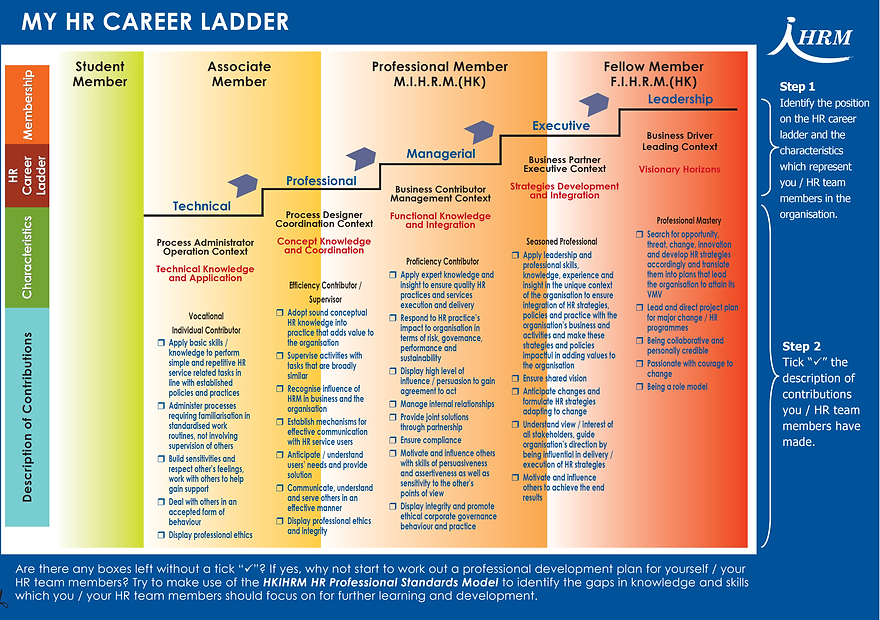
Showcase Your Designation: Fellow Member – F.I.H.R.M.(HK)

The designation F.I.H.R.M.(HK) marks you as a Fellow Member of the Hong Kong Institute of Human Resource Management, the definitive benchmark of HR expertise in Hong Kong.

This designation signifies a commitment to high standards, ethical practice, and continuous development in the field.

Where to Display It:

Be proud of your achievement! Incorporate F.I.H.R.M.(HK) consistently across your professional profile. Sample is as below.

  1. Business Cards

Your Name, F.I.H.R.M.(HK)


  • LinkedIn Headline

HR Leader | Professional Member of the Hong Kong Institute of Human Resource Management (F.I.H.R.M.(HK)) | Specialising in Talent Strategy & Organisational Development


  1. Resume/Bio
    “As a Fellow Member of the Hong Kong Institute of Human Resource Management (F.I.H.R.M.(HK)), I am committed to upholding the professional standards of HR practice.” / 


“Holder of the F.I.H.R.M.(HK) designation, which denotes recognised expertise and a formal commitment to continuous professional development within the Hong Kong HR sector.”

Update your profile today and let your F.I.H.R.M.(HK) designation speak for your professionalism.

彰顯您的專業資格:香港人力資源管理學會專業會員 – M.I.H.R.M.(HK)

M.I.H.R.M.(HK) 標誌著您作為香港人力資源管理學會的專業會員,此乃香港人力資源專業知識的權威基準。

此資格代表您對業內高標準、道德實踐及持續發展的承諾。

展示方式:
自豪地展示您的成就。請在所有專業資料中統一標明 M.I.H.R.M.(HK) 會籍。範例參考:

  1. 名片
    您的姓名, M.I.H.R.M.(HK)
  2. LinkedIn 標題
    人力資源領導者 | 香港人力資源管理學會專業會員 (M.I.H.R.M.(HK)) | 專注於人才策略與組織發展
  3. 履歷 / 個人簡介
    「作為香港人力資源管理學會專業會員 (M.I.H.R.M.(HK)),我致力推動人力資源實踐的專業標準。」/

    「持有香港人力資源管理學會專業會員資格 (M.I.H.R.M.(HK)),此為香港人力資源領域之權威專業認證,標誌著對行業最高標準之認可與承諾。」

立即更新個人資料,讓 M.I.H.R.M.(HK) 資格成為您專業能力的最佳證明。

Showcase Your Designation: Professional Member – M.I.H.R.M.(HK)

HKIHRM Members’ Privilege – Asia Council Membership of The Conference Board (TCB)

The designation M.I.H.R.M.(HK) marks you as a Professional Member of the Hong Kong Institute of Human Resource Management, the definitive benchmark of HR expertise in Hong Kong.

This designation signifies a commitment to high standards, ethical practice, and continuous development in the field.

Where to Display It:

Be proud of your achievement! Incorporate M.I.H.R.M.(HK) consistently across your professional profile. Sample is as below.

  1. Business Cards

Your Name, M.I.H.R.M.(HK)


  • LinkedIn Headline

HR Leader | Professional Member of the Hong Kong Institute of Human Resource Management (M.I.H.R.M.(HK)) | Specialising in Talent Strategy & Organisational Development

  1. Resume/Bio
    “As a Professional Member of the Hong Kong Institute of Human Resource Management (M.I.H.R.M.(HK)), I am committed to upholding the professional standards of HR practice.” / 

“Holder of the M.I.H.R.M.(HK) designation, which denotes recognised expertise and a formal commitment to continuous professional development within the Hong Kong HR sector.”

Update your profile today and let your M.I.H.R.M.(HK) designation speak for your professionalism.

需要幫助?想加入我們?有問題想查詢?

我們隨時為您服務!請留言給我們,我們的團隊會盡快回覆您。

      Pesonal Information

      Training Information

      Need assistance? Interested in joining us? Or just have a question?

      We’re here to help! Reach out via message, and our team will respond as quickly as possible.

        Asia Council Membership

        HKIHRM Members’ Privilege – Asia Council Membership of The Conference Board (TCB)

        As a HKIHRM Fellow and Professional Member, you are entitled to a 20% discount for joining the Asia Council Membership of TCB, an international think tank that delivers trusted insights for what’s ahead.

        TCB of Asia Council package offers a peer network, a portfolio of thought leadership, and access to experts to help address your job challenges and strengthen your team and organisation’s performance. By bringing together select senior executives from the world’s leading companies, the Council engages you in an immersive, solutions-focused conversation.

        The Asia Council Membership includes:

        • Two to three in-person meetings a year
        • Private Council website
        • Council bench-marking surveys and dedicated support from your Council team

        Eligibility:

        • Active HKIHRM Fellow and Professional Members
        • Individual basis
        • The application is subject to TCB’s vetting and approval

        Discounted Offer (1st year of membership only)

        • Year 1: USD 9,000 (USD 7,200)

        Application & Enquiry:
        Mr Brendan Moran
        Email: Brendan.moran@conference-board.org Tel: +65 6645 4696

        Reciprocal Membership

        Mutual Recognition of Professional Membership between HKIHRM and Canada-based CPHR British Colombia & Yukon

        HKIHRM has established mutual recognition of Professional Membership with the Chartered Professionals in Human Resources of British Columbia and Yukon CPHR British Colombia & Yukon since 2015. This understanding is based on a recognition of ‘substantial equivalency’ of the F.I.H.R.M.(HK) or M.I.H.R.M.(HK) designation to those of the CPHRTM designation, a CPHR British Colombia & Yukon’s Chartered Professional in Human Resources designation. HKIHRM Fellow Members and Professional Members are eligible to obtain the CPHRTM designation from CPHR British Colombia & Yukon.

        • To become a Professional Member M.I.H.R.M.(HK) of HKIHRM, please click HERE  for more information. Application form can be downloaded HERE .
        • To become a CPHRTM member of CPHR British Colombia & Yukon, please click HERE for more information. Application form can be downloaded HERE.

        Enquiry:

        HKIHRM: +(852) 2837 3814, membership@hkihrm.org 

        CPHR British Colombia & Yukon: Please send your application directly to cphr@cphrbc.ca, https://cphrbc.ca/cphr/i-am-a-cphr/cphr-mutual-recognition/

        Terms and Conditions

        1. Membership fee is charged for members joining between 1 April and 31 March for one-year or two-year subscription. (and subject to meeting mandatory CPD requirement for Professional-route-based Membership  only for renewed Fellow, Professional and Associate Members)
        2. Entrance and annual subscription fees are subject to review by the Institute without prior notice.
        3. HKIHRM will notify members to renew their membership via mail and email every year in March. Members can settle renewal fee by different payment methods marked in the invoice and enjoy the discount rate if the renewal fee is settled before the early bird period. E-vouchers will be provided if the renewal fee is settled.
        4. The upgraded membership fee is charged for members joining between 1 April and 31 March for one year or two years subscription (Same as selected membership renewal period).
        5. Member must have a valid membership and meet the upgrade requirements in order to apply for a membership upgrade. For assistance with the application process, please contact Member Services Team.
        6. Those aged 60 or above AND on permanent retirement may notify HKIHRM by email to enjoy 50% discount on the individual membership fee.
        7. Members can apply for membership reinstatement after their membership has been suspended since the introduction of new membership scheme on 1 April 2010 by:
          • paying a reinstatement fee (all the outstanding annual membership fee since his / her suspension); and
          • providing CPD records for the year(s) showing you have met the CPD requirement since you have ceased to be a member (if applicable)
        8. HKIHRM shall has absolute discretion in respect of each application to decide conclusively whether he / she has fulfilled the conditions applicable to his / her case or not. The decision of the HKIHRM is final and shall not be subject to any appeal. Membership fee is non-cancellable and non-refundable.


        If you have any enquiry on membership, please contact
        Member Services Team (2837 3814 / 2837 3813) or email at membership@hkihrm.org.